Altcoin Rotation Narrows Despite PORTAL Rally as Bitcoin Sentiment Stays Fragile

Executive Takeaway
The Binance weekly close into 2026-06-01 kept crypto in a defensive posture. Weak Downtrend remained the dominant regime, conviction was only 4.0/10, and 267 of 401 tracked assets closed the week with negative rate of change. The market was not in full panic, but it also was not in broad recovery: support tags stayed high, oversold readings expanded, and durable trend participation remained thin.
BTC closed down 4.40% at 73,674.39, while the sentiment layer pointed to fragile long crowding instead of healthy spot-led demand. Positive funding, negative Coinbase premium, ETF outflows, and oil/rate/geopolitical pressure all kept the market exposed to another leverage reset. The best long-side opportunities are therefore strict rebound structures, not broad altseason exposure. The cleaner trend-following side remains bearish structural continuation in weaker assets. This week’s stance is cautious and selective: rebounds can work, but only if BTC stabilizes and the market stops punishing crowded longs.
Weekly Market State
The closed weekly state remained bearish-leaning. Weak Downtrend led with 218 assets, followed by 209 Range-Bound assets and 107 Strong Downtrend assets. Momentum stayed negative: 267 assets had negative rate of change versus 127 positive, 369 assets had RSI below 50, and 259 showed negative volume delta. Support remained visible with 200 support-level tags, but that support was defensive because bearish structure was still broad, including 217 lower-high signals and 245 lower-low signals.
The final aligned daily close also finished in Weak Downtrend, with 244 assets in that regime and 201 Range-Bound. Short-term breadth improved late in the week, with 300 assets showing positive daily rate of change into the final close, but trend pressure still leaned weak: 350 assets remained below their 200-day SMA trend proxy and 320 carried bearish lower-low structure. The late-week move was a stabilization attempt inside a weak weekly tape, not a clean regime reversal.
What Changed From Last Week
- Breadth: positive weekly rate-of-change names slipped from 143 to 127, while negative names rose from 259 to 267.
- Support/candles: support tags eased from 207 to 200, bearish candlestick patterns dropped from 162 to 65, and bullish candles fell from 93 to 55.
- Trend: bearish lower highs eased from 222 to 217, but bearish lower lows stayed heavy at 245; strong ADX trend counts fell from 182 to 171.
- Structure: Range-Bound names increased from 201 to 209, while Low-Volatility Coil names fell from 55 to 45.
- Regime: Strong Downtrend improved from 119 to 107, but Weak Downtrend increased from 213 to 218.
- Conviction: the weekly conviction score stayed low at 4.0/10, keeping the market tactical rather than directional.
Category Rotation
Category rotation was narrow and outlier-driven. Gaming led qualified categories with a 36.92% mean close rate of change across 10 symbols and a 90% win rate, but PORTALUSDT’s +294.77% weekly move heavily distorted the mean. The Gaming median was a much more modest +5.97%, so the sector showed participation but not a clean, broad impulse.
AI ranked second by mean return at +5.23% across 28 symbols, yet the median was -2.88% and only 7 of 28 AI symbols closed positive. That makes AI an outlier category this week rather than a healthy rotation. NFT and Collectibles also screened positive on mean return at +2.55%, but its median was -2.79% and win rate was only 40%. Store of Value and Fan Tokens were the weakest qualified groups, with Store of Value posting a 0% win rate and Fan Tokens closing with 10 of 11 names negative.
How the Week Unfolded
- 2026-05-24 close: Weak Downtrend led, 366 assets showed negative daily rate of change, and bearish-regime counts stood at 317.
- 2026-05-25 close: a relief attempt appeared as positive daily rate-of-change names jumped to 299 and bearish-regime counts fell by 26.
- 2026-05-26 close: weakness returned quickly; negative daily rate-of-change names rose to 346 and bearish-regime counts increased by 44.
- 2026-05-27 close: downside pressure broadened again, with bearish-regime counts reaching 363 and bullish-regime counts slipping to 115.
- 2026-05-28 close: the week’s weakest internal point arrived as bearish-regime counts climbed to 416 and range participation fell by 30.
- 2026-05-29 close: a rebound started to form, with positive daily rate-of-change names rising to 225 and range-regime counts increasing by 32.
- 2026-05-30 close: the rebound broadened into the final daily close, with 300 positive daily rate-of-change names, but Weak Downtrend still remained dominant.
BTC Sentiment
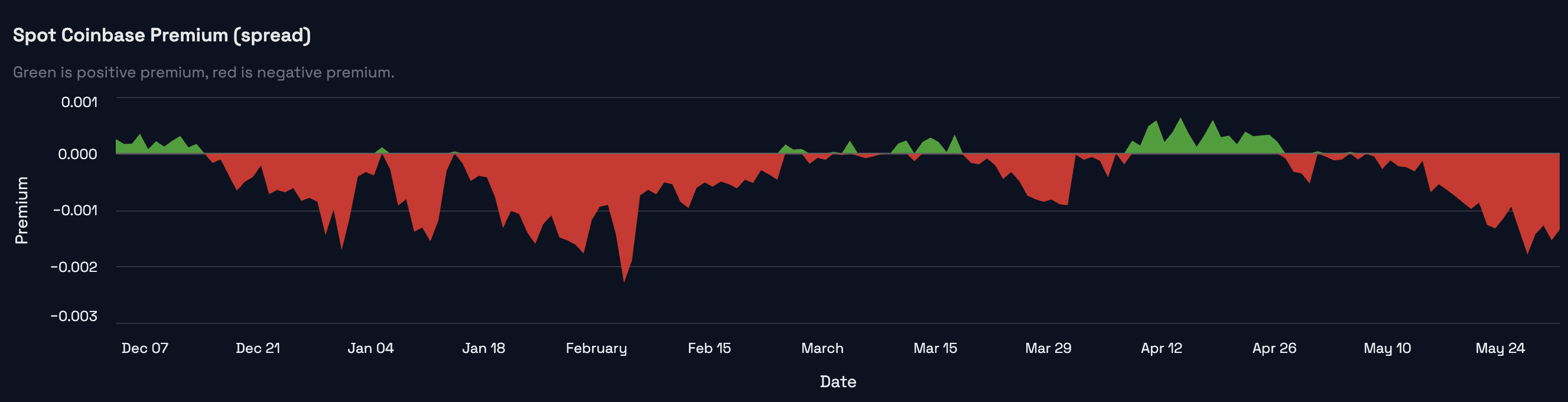
BTC closed the week at 73,674.39, down 4.40%, while the Phase 1 sentiment read pointed to fragile long crowding. Open interest finished higher, funding rose, and the long/short ratio stayed above 1 even as price fell. That combination says leverage was leaning long while price action was not rewarding the positioning.
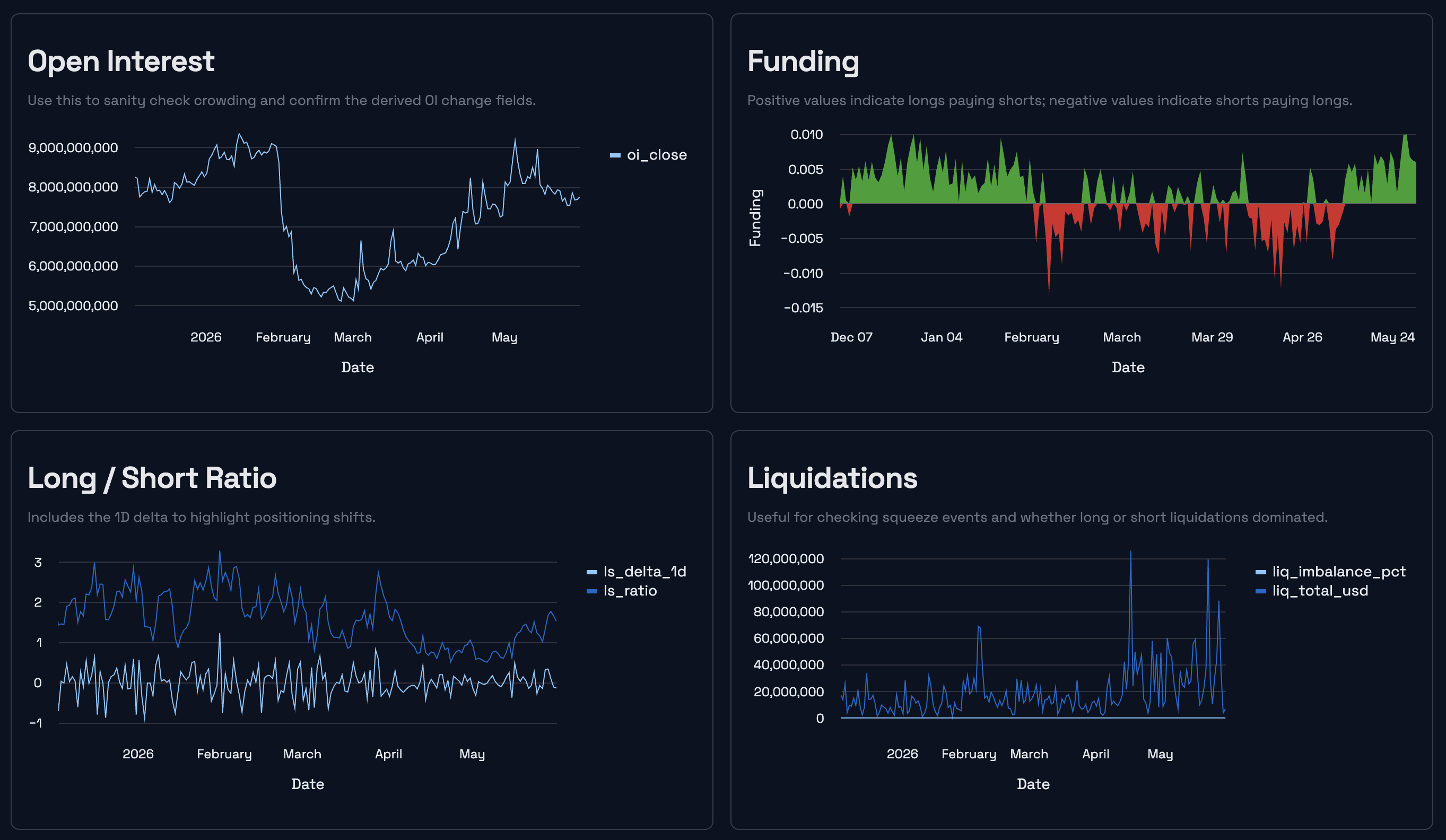
The spot-flow picture was mixed rather than cleanly bearish. Spot CVD improved across the week, but the latest row still showed sell-side spot flow, and Coinbase premium remained negative. BTC did not show the persistent U.S. spot demand or neutralized funding backdrop that would make bullish continuation feel durable.
News and Catalysts
- Source-backed brief: Bitcoin derivatives and spot-demand stress confirmed the core market read. Multiple May 2026 reports described positive funding, reheated long exposure, negative Coinbase premium, and ETF outflows. Newsletter implication: BTC weakness was not just price noise; it was a fragile leverage-and-demand setup. Source examples: TradingView/Cointelegraph, FXStreet/K33, crypto.news, Bitfinex.
- Source-backed brief: macro pressure stayed material because oil, Middle East conflict risk, and Fed-pricing uncertainty were repeatedly linked to crypto weakness. Newsletter implication: market structure and BTC demand come first, but macro can still be the trigger that forces weak structures lower. Source examples: CryptoSlate, crypto.news, Time, BBC.
- Source-backed brief: sentiment was mixed-to-cautious. Social discussion leaned optimistic in places, but external checks pointed to ETF outflows, neutral news tone, and unrewarded leverage. Newsletter implication: social optimism is a risk flag when it appears beside weak spot-demand evidence.
- Narrative brief: Ethereum’s current story is more durable settlement layer than high-growth chain momentum. Newsletter implication: ETH deserves attention because its narrative is more constructive than its weekly tape, creating a gap between long-term thesis and short-term demand.
Last Week Setup Scorecard
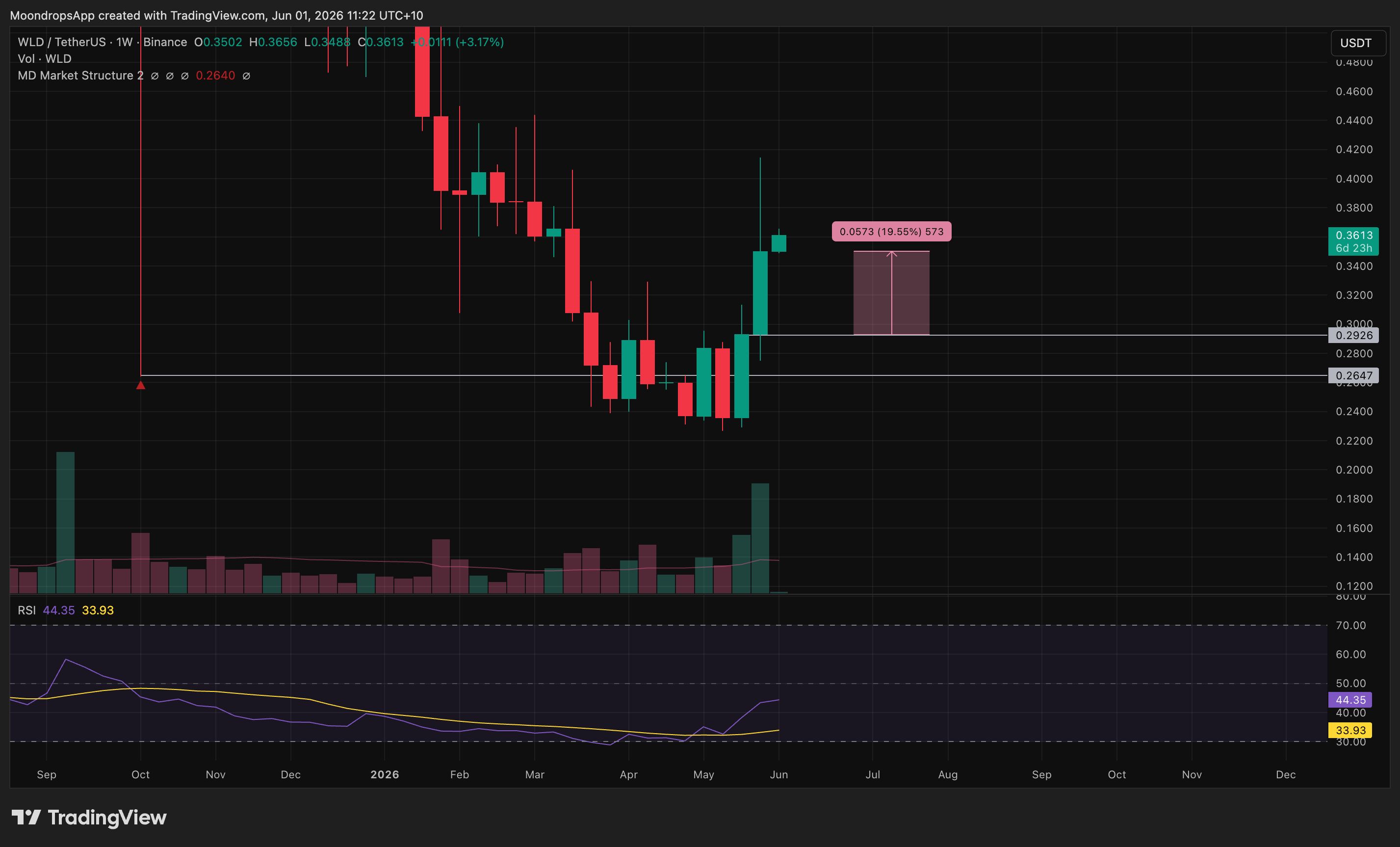
Last week’s setup board was mixed but useful. The long-side Support-Bound Mean Reversion group produced a 3/5 hit rate: WLDUSDT, FETUSDT, and ICPUSDT finished positive, while SUIUSDT and FILUSDT failed to sustain weekly upside. The wins were volatile rather than clean; WLDUSDT and FETUSDT both needed late-week strength after adverse daily moves.
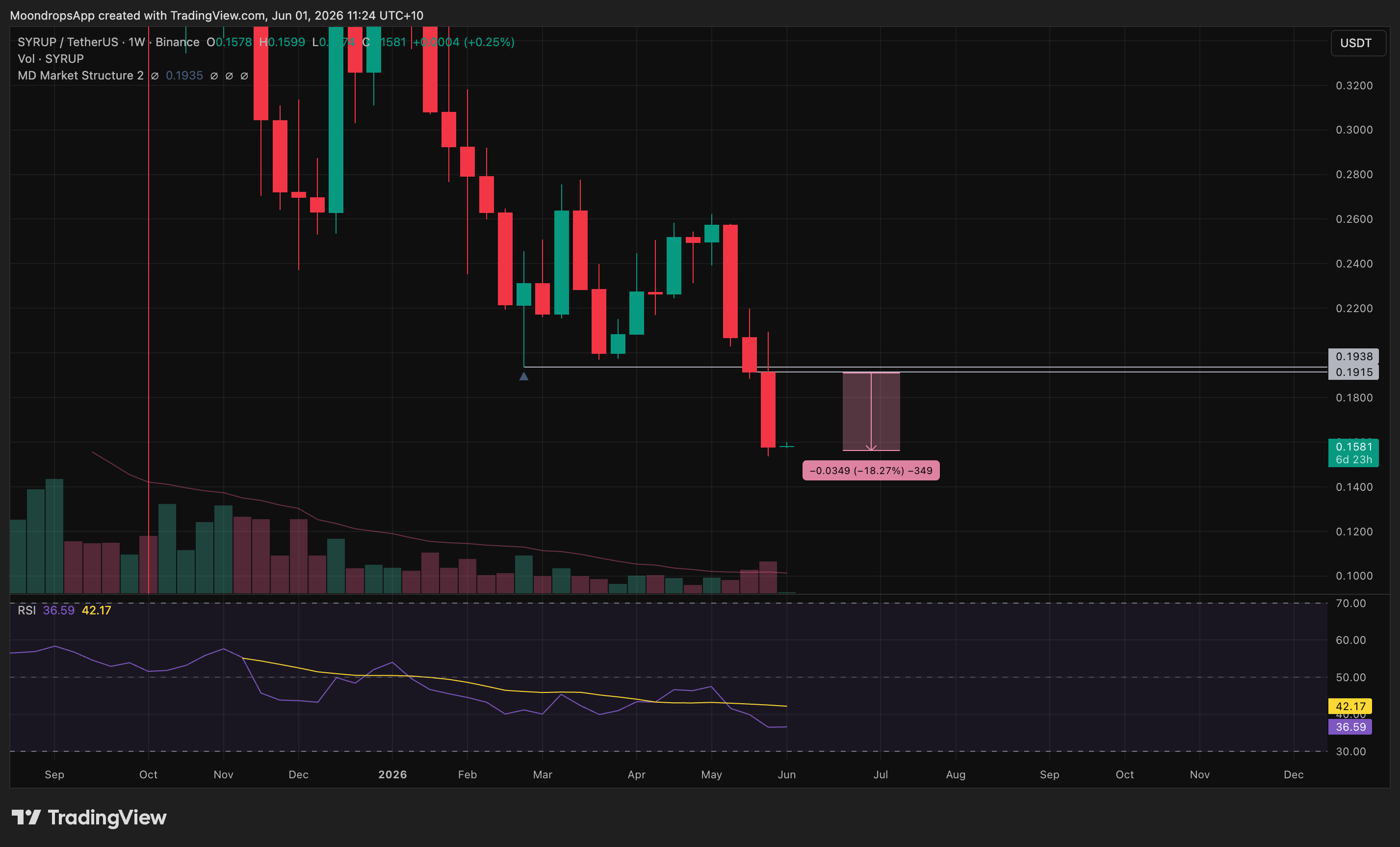
The short-side Bearish Trend Continuation group also produced a 3/5 hit rate. SYRUPUSDT, ASRUSDT, and CITYUSDT closed in the expected bearish direction, while TLMUSDT and GNSUSDT ended mixed against the short bias. The scorecard supports keeping both rebound and bearish-continuation families active this week, but both sides require tight entries and clear invalidation.
Top Setups This Week
Trade Setups 1: Oversold Support Rejection
PORTALUSDT $0.03245
Bias: Long
Thesis: PORTALUSDT is the strongest tactical rebound candidate, closing +294.77% with extreme volume participation and driving Gaming category leadership.
Trigger condition: Price holds above the weekly breakout area and avoids a full retrace of the high-volume impulse.
Invalidation condition: Loss of post-breakout support or a sharp collapse in relative volume turns the move into an exhausted spike.
Target logic: Target the next weekly supply pocket, with partial profit discipline because the move is already extended.
Risk factors: Outlier-driven category move, elevated exhaustion risk, and limited read-through from the broader market.
Confidence: Medium
IOUSDT $0.1764
Bias: Long
Thesis: IOUSDT closed +22.67% and screened as an Oversold Support Rejection candidate without the same extreme extension as PORTALUSDT.
Trigger condition: Price holds reclaimed weekly support and confirms with improving volume delta.
Invalidation condition: A close back below support with negative momentum breaks the rejection thesis.
Target logic: Target the nearest weekly resistance or prior breakdown zone rather than assuming trend expansion.
Risk factors: Weekly volume delta was negative, and the broader market remains weak.
Confidence: Medium
IDUSDT $0.0393
Bias: Long
Thesis: IDUSDT closed +27.60% and helped NFT and Collectibles screen positive, making it a high-signal rebound candidate despite weak broad participation.
Trigger condition: Price holds reclaimed weekly support and follows through above the impulse close.
Invalidation condition: Failure back through support or continued negative volume delta invalidates the setup.
Target logic: Target the next resistance band first, then reassess only if breadth improves.
Risk factors: Category performance was outlier-driven, weekly RSI remained below 50, and volume delta was negative.
Confidence: Medium
TRUMPUSDT $2.016
Bias: Long
Thesis: TRUMPUSDT remains a tactical oversold-rejection candidate because it qualifies inside the long setup family even though its weekly close was negative.
Trigger condition: Price reclaims short-term resistance and momentum improves from deeply oversold conditions.
Invalidation condition: A fresh weekly low or failure to hold support cancels the rebound case.
Target logic: Target mean reversion toward the prior range midpoint, not a trend reversal.
Risk factors: Weekly close was -2.28%, RSI was low at 25.54, and sentiment-driven moves can reverse quickly.
Confidence: Low
BIOUSDT $0.0308
Bias: Long
Thesis: BIOUSDT matched the support-rejection family through support, bullish Ichimoku cross behavior, Weak Downtrend, and Range-Bound conditions.
Trigger condition: Price holds support and shows renewed upside above the weekly close.
Invalidation condition: A close below support with continued negative volume delta invalidates the rebound thesis.
Target logic: Target the next range resistance while treating the move as tactical.
Risk factors: Weekly close was -7.78%, volume participation was muted, and broad conditions do not support aggressive rebound assumptions.
Confidence: Low
Trade Setups 2: Bearish Structural Continuation
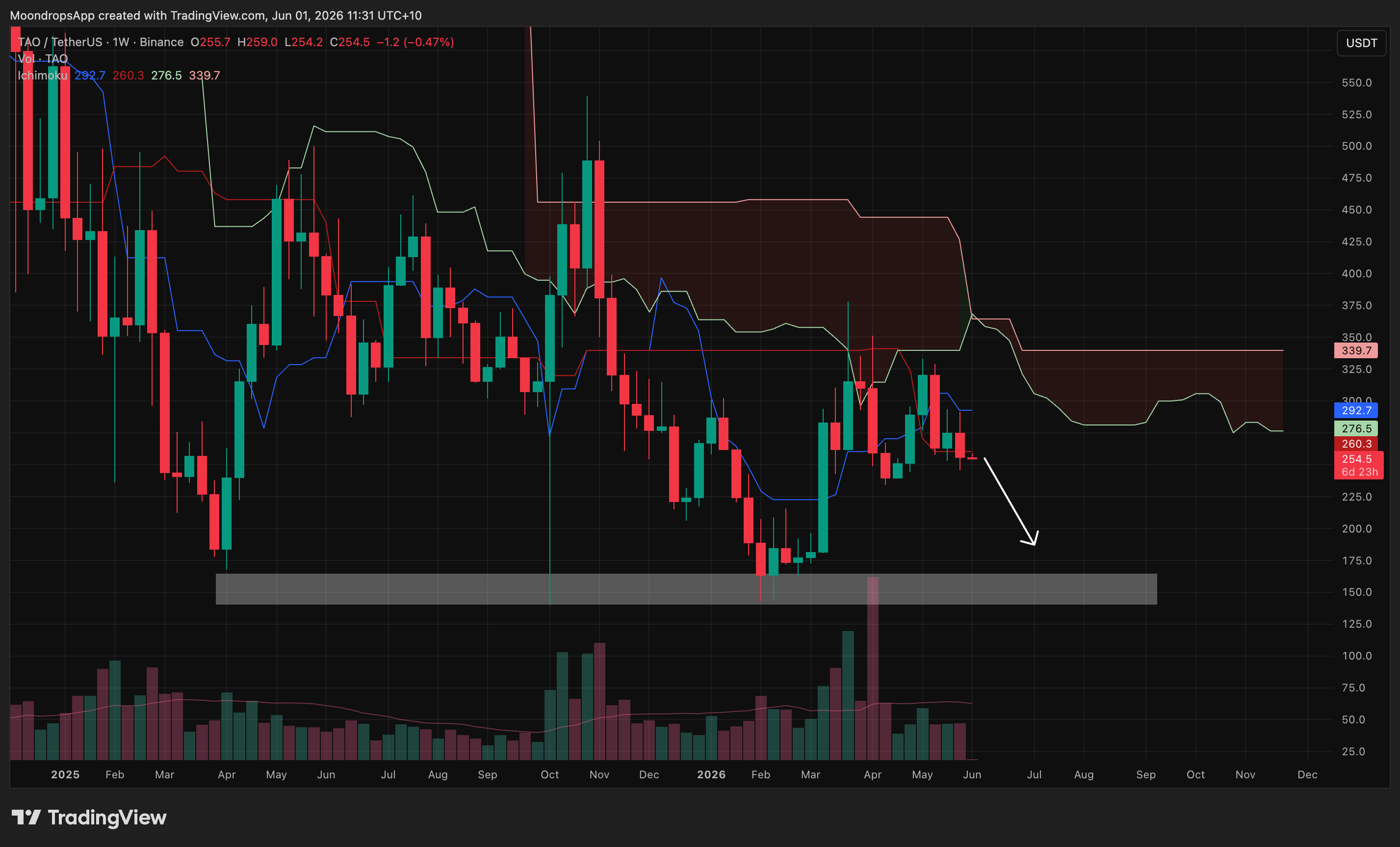
TAOUSDT $255.7
Bias: Short
Thesis: TAOUSDT is the cleanest bearish-continuation candidate, matching bearish candles, bearish Kijun/price cross, negative volume delta, and Weak Downtrend.
Trigger condition: Price rejects below the weekly close or fails to reclaim broken structure.
Invalidation condition: A reclaim of resistance with positive volume delta weakens the short thesis.
Target logic: Target the next weekly demand area, then trail only if downside breadth expands.
Risk factors: AI remains a popular narrative, and any sector rebound can squeeze bearish setups.
Confidence: Medium
POLYXUSDT $0.0501
Bias: Short
Thesis: POLYXUSDT closed -10.05% and matched bearish candles, bearish Kijun/price cross, and Weak Downtrend.
Trigger condition: Price remains below broken support or rejects on a weak retest.
Invalidation condition: A sustained reclaim of the breakdown level invalidates continuation.
Target logic: Target lower weekly support first, with continuation only if volume expands into downside.
Risk factors: Positive weekly volume delta can create squeeze risk if price stabilizes.
Confidence: Medium
SOLUSDT $82.44
Bias: Short
Thesis: SOLUSDT is a major read-through asset in the bearish-continuation family, closing -3.32% with RSI at 37.16 and weak weekly trend posture.
Trigger condition: SOL fails below the weekly close while BTC remains pressured.
Invalidation condition: A reclaim of resistance with improving daily breadth neutralizes the short setup.
Target logic: Target the next weekly support zone and reassess around any broad-market BTC stabilization.
Risk factors: SOL can rebound sharply when liquidity returns, and its weekly volume delta was positive.
Confidence: Medium
RLUSDUSDT $1.0013
Bias: Short
Thesis: RLUSDUSDT appears in the bearish family but should be treated as a special-case stability instrument rather than a conventional directional alt setup.
Trigger condition: Price materially deviates above its normal stability range and then rejects.
Invalidation condition: Stable behavior around peg-like pricing invalidates any practical short setup.
Target logic: Target normalization toward the stability range rather than a momentum breakdown.
Risk factors: Stablecoin-like behavior makes this a poor expressive trade for most readers.
Confidence: Low
TRXUSDT $0.3514
Bias: Short
Thesis: TRXUSDT closed -3.91% and sits in the bearish-continuation setup list, but RSI remained firm at 63.32, so the short case needs confirmation.
Trigger condition: Price loses the weekly close area and confirms with weaker volume delta.
Invalidation condition: A reclaim above resistance or continued relative strength versus majors invalidates the short idea.
Target logic: Target the next support shelf first, without assuming deep downside unless broader breadth weakens.
Risk factors: Relative strength can make TRX a poor short if BTC stabilizes.
Confidence: Low
Asset Drilldowns
BTCUSDT
BTCUSDT closed at 73,674.39, down 4.40% on the week. Internally, BTC was weak but not capitulatory: RSI was 42.51, weekly relative volume was below 1, and volume delta was positive. The problem is the broader structure. BTC sentiment showed rising funding, higher open interest, a long/short ratio above 1, and negative Coinbase premium while price fell. That is fragile because leverage was leaning long without clear spot confirmation.
The clean bullish condition is a positive Coinbase premium shift, normalized funding, and price reclaiming the upper part of the current range. Without that, BTC remains vulnerable to long liquidation pressure if macro headlines or ETF outflows keep weighing on demand. BTC does not need to collapse for alt setups to fail; it only needs to keep chopping lower while leverage stays crowded.
ETHUSDT
ETHUSDT closed at 2,007.01, down 4.42%, with RSI at 37.41 and negative weekly volume delta. The narrative around ETH is more constructive than the tape: current discussion emphasizes Ethereum as durable neutral settlement infrastructure rather than a high-growth throughput story. That long-term framing matters, but it did not translate into near-term demand during the weekly window.
The key ETH question this week is whether that settlement-layer narrative can attract flows while BTC remains fragile. If ETH cannot reclaim short-term resistance and volume delta stays negative, the narrative remains background context rather than a trading catalyst. A stronger ETH read requires reclaim behavior plus signs that capital is rotating into majors, not only chasing isolated outlier tokens.
SOLUSDT
SOLUSDT closed at 82.44, down 3.32%, with RSI at 37.16 and below-average weekly volume. SOL matters because it is both a major read-through asset and a bearish-continuation candidate. If SOL keeps failing below resistance while BTC funding and Coinbase premium remain stressed, it confirms that large-cap alt risk is not ready for broad recovery.
The short setup is not risk-free because SOL’s weekly volume delta was positive, and the asset can move quickly when liquidity returns. Structure is the practical line: failure below the weekly close favors continuation toward support, while a reclaim of resistance and improving breadth would shift SOL from short candidate to neutral read-through.
PORTALUSDT
PORTALUSDT closed at 0.03245, up 294.77%, with relative volume at 7.17 and RSI at 62.16. It was the most visible rebound candidate and the single largest contributor to Gaming category leadership. That makes it worth covering, but also gives the setup obvious outlier risk.
The bullish case is continuation after a high-volume support rejection, but the trade should not be treated like early accumulation after such a large weekly move. The cleaner read is whether price can hold its breakout area and maintain participation. A failure back into the prior range would turn the move into a blow-off rather than a durable rotation signal.
TAOUSDT
TAOUSDT closed at 255.7, down 6.98%, with negative weekly volume delta and a bearish-continuation match. That matters because AI screened positive by mean return, but the median AI name was negative and only 7 of 28 AI assets closed positive. TAO sits on the other side of the category story: AI attention exists, but broad AI participation was not healthy.
The bearish thesis is continuation after weak structure and negative participation. The risk is narrative squeeze: if AI attention rotates back into higher-quality names, TAO can rebound even from a weak technical base. For now, TAO remains short-biased only while it rejects below resistance and volume delta does not improve.
What Invalidates the Outlook
The cautious outlook is invalidated if BTC reclaims its range with normalized funding, Coinbase premium turns positive, and weekly breadth expands beyond isolated rebound names. A meaningful improvement would show up as more assets moving out of Weak Downtrend and Strong Downtrend into Range-Bound or Weak Uptrend while negative rate-of-change counts contract. For the long setup family, invalidation is failure to hold reclaimed support after oversold bounces. For the bearish-continuation family, invalidation is reclaim behavior above broken structure with improving volume delta.
The bearish risk case strengthens if BTC loses support while funding remains positive, ETF outflows persist, and macro pressure from oil, rates, or geopolitical headlines pushes traders away from risk. In that case, crowded long exposure can turn late-week stabilization into another liquidation leg.
What to Watch This Week
Watch BTC funding, Coinbase premium, ETF flow tone, and whether open interest keeps rising while price fails to reclaim resistance. Watch the daily regime mix to confirm whether late-week stabilization is expanding beyond a bounce: positive rate-of-change names need to stay broad, and Weak Downtrend counts need to fall. Watch Gaming and AI because both led by mean return but carried outlier risk; broad category participation matters more than one or two extreme movers. Watch ETH for whether the durable settlement-layer narrative translates into demand, and watch SOL for whether large-cap alt structure confirms or rejects the bearish continuation board.
Disclaimer
This newsletter is for informational and educational purposes only and does not constitute financial advice. Crypto markets are volatile, and all trading decisions require independent research, risk management, and position sizing discipline.